Discrete 8-bit CPU
A working computer built gate-by-gate from 74LS chips: bus architecture, microcoded control, and sixteen whole bytes of RAM.
Premise
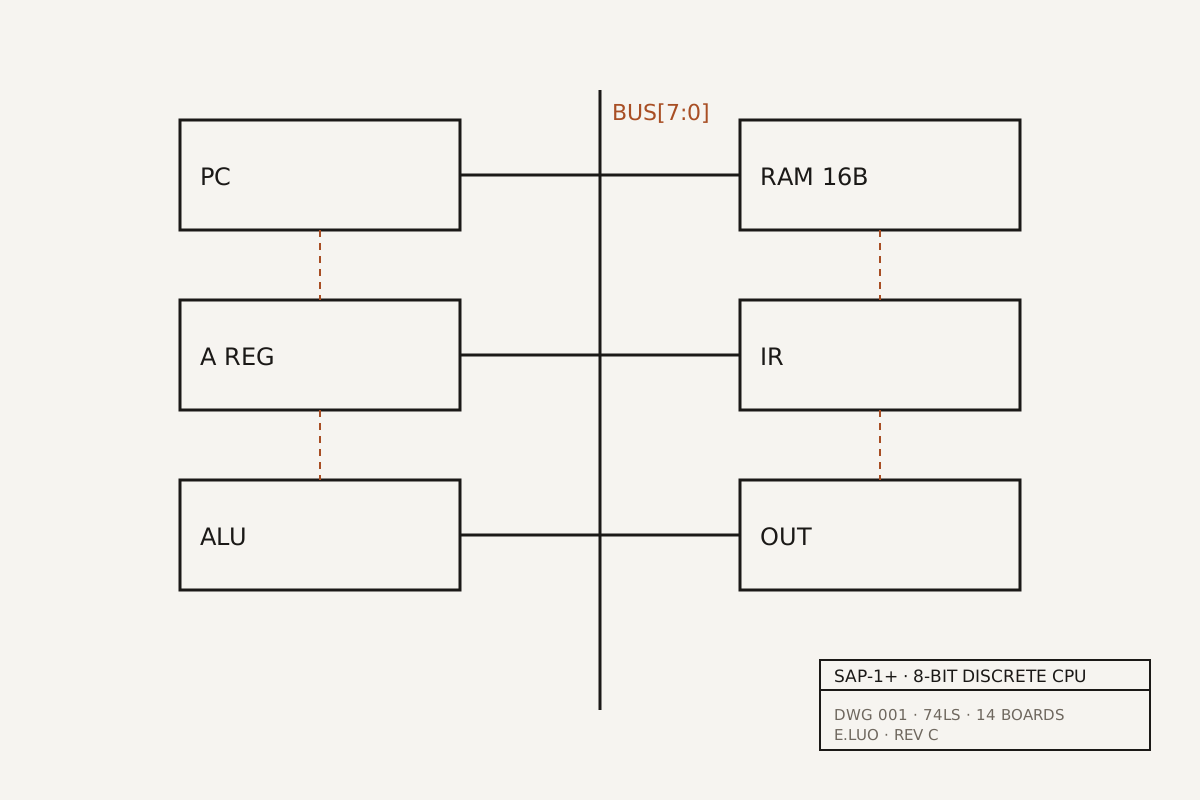
I wanted to lose the ability to say “the computer just does it.” The way to lose it is to build the computer, so I did — an 8-bit CPU in the SAP lineage, spread across fourteen breadboards: program counter, two registers, an adder/subtractor ALU, sixteen bytes of RAM, an instruction register, and a microcoded control unit driving it all over a shared bus.
The architecture, briefly
Everything is a bus citizen. A module can assert onto the eight bus lines through tri-state buffers, or latch from them, and the control word says who talks and who listens on each clock tick:
FETCH:  MI CO   →  RO II CE
LDA x:  IO MI   →  RO AI
ADD x:  IO MI   →  RO BI  →  EO AI FI
OUT:    AO OI
Two EEPROMs hold the microcode; opcode plus step counter goes in on the address pins, sixteen control lines come out. Writing the microcode assembler in Python (rather than hand-typing hex) is the single decision I’d defend in court.
Selected disasters
- The phantom opcode. A floating input on the instruction register
read
0x00on Tuesdays and0x40in the afternoon sun. TTL inputs are not optional. Tie them off. - Brownout memory. All fourteen boards on one daisy-chained rail drooped enough under LED load to scramble RAM. Star power distribution from a single bench supply node fixed it permanently.
- Write-cycle roulette. RAM latched on the wrong clock phase and occasionally stored the next bus value. One 74LS04 inverter, one weekend of my life.
Verdict
It computes Fibonacci until 8 bits give out, multiplies by repeated addition, and makes a very convincing desk ornament between programs. Follow-up plan: same architecture on a real PCB with 256 bytes and a proper reset circuit — the KiCad files are already started.