LAN receipt printer
A thrifted Epson TM-T88 turned network appliance: an ESP32 web server feeds it ESC/POS, so anything on the Wi-Fi can print a note.
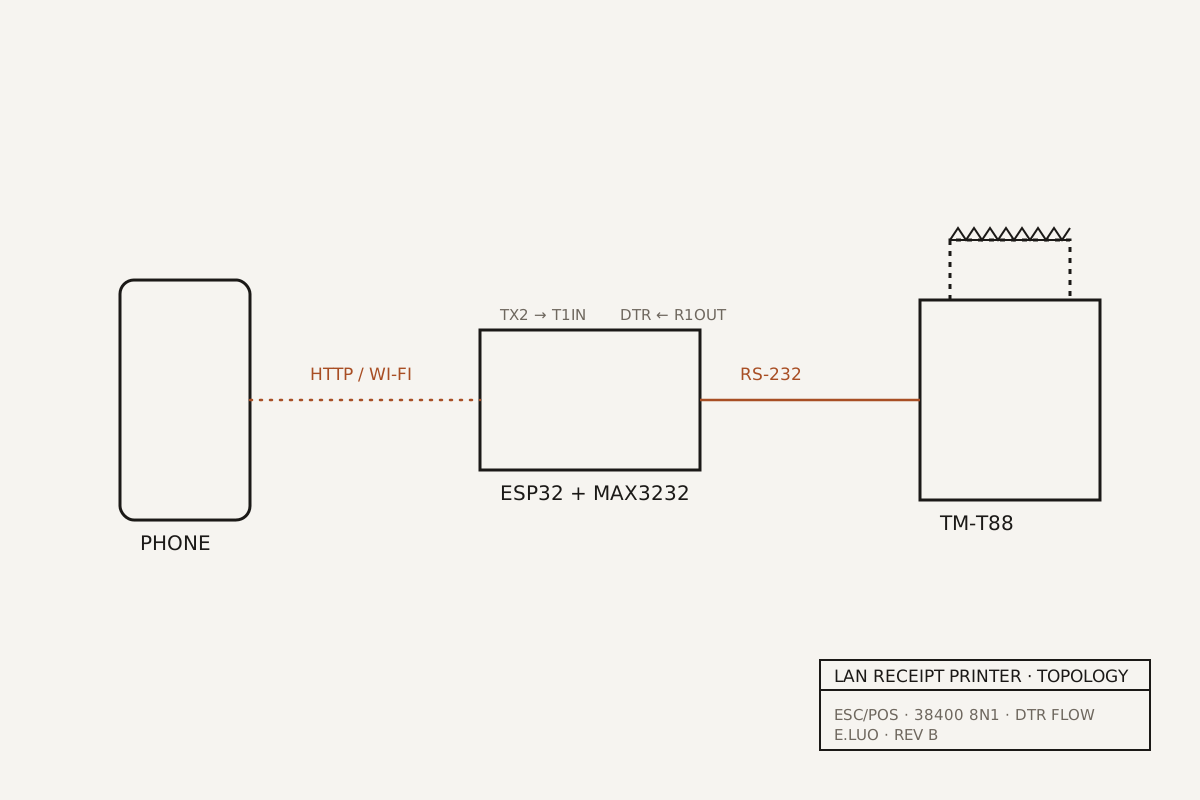
Concept
A receipt printer is a display that produces artifacts. No ink cartridges, no drivers worth mentioning, paper by the kilometer for pocket change — and a print head that’s been bulletproof in diners since the nineties. Mine came from a restaurant-supply liquidation with one dent and zero problems.
The build puts an ESP32 in front of it: the ESP32 joins the house Wi-Fi, serves a one-page web UI, and translates whatever you type (or upload) into ESC/POS bytes over serial. Anyone on the network can leave a note that exists physically, next to the kettle, with a timestamp.
The electrical part
The TM-T88 speaks true RS-232 at ±12 V. The ESP32 speaks 3.3 V and will die defending that opinion. A MAX3232 transceiver bridges them:
ESP32 TX2  → MAX3232 T1IN   → printer RXD
ESP32 RX2  ← MAX3232 R1OUT  ← printer DTR (flow control)
Honoring DTR turned out to be non-negotiable — raster images overflow the printer’s buffer instantly without it, and you get modern art instead of your photo.
The firmware part
PlatformIO project, three responsibilities:
- Serve the UI — a single HTML file in flash with a textarea, an image picker, and a big PRINT button.
- Queue jobs — a FIFO so two simultaneous prints don’t interleave bytes. (Discovered empirically. The interleaved output had admirers.)
- Translate — text goes out with alignment/size commands; images get
resized to 384 px, Floyd–Steinberg dithered to 1-bit, and streamed with
GS v 0raster commands.
// The whole ESC/POS "driver" is writing bytes with intent:
void cut() { serial.write("\x1D\x56\x42\x00", 4); }   // GS V — partial cut
void center() { serial.write("\x1B\x61\x01", 3); }    // ESC a 1
In service
It has survived months of daily use: shopping lists, doodles from visiting cousins, a printed haiku pipeline that ran until the novelty wore off (it hasn’t). Thermal paper fades in a year or two — for a household message board, that’s a feature.