3D-printed cone light modifier
A parametric flash-to-softlight cone, printed in white PLA and tuned over nine revisions until the falloff earned a place in the bag.
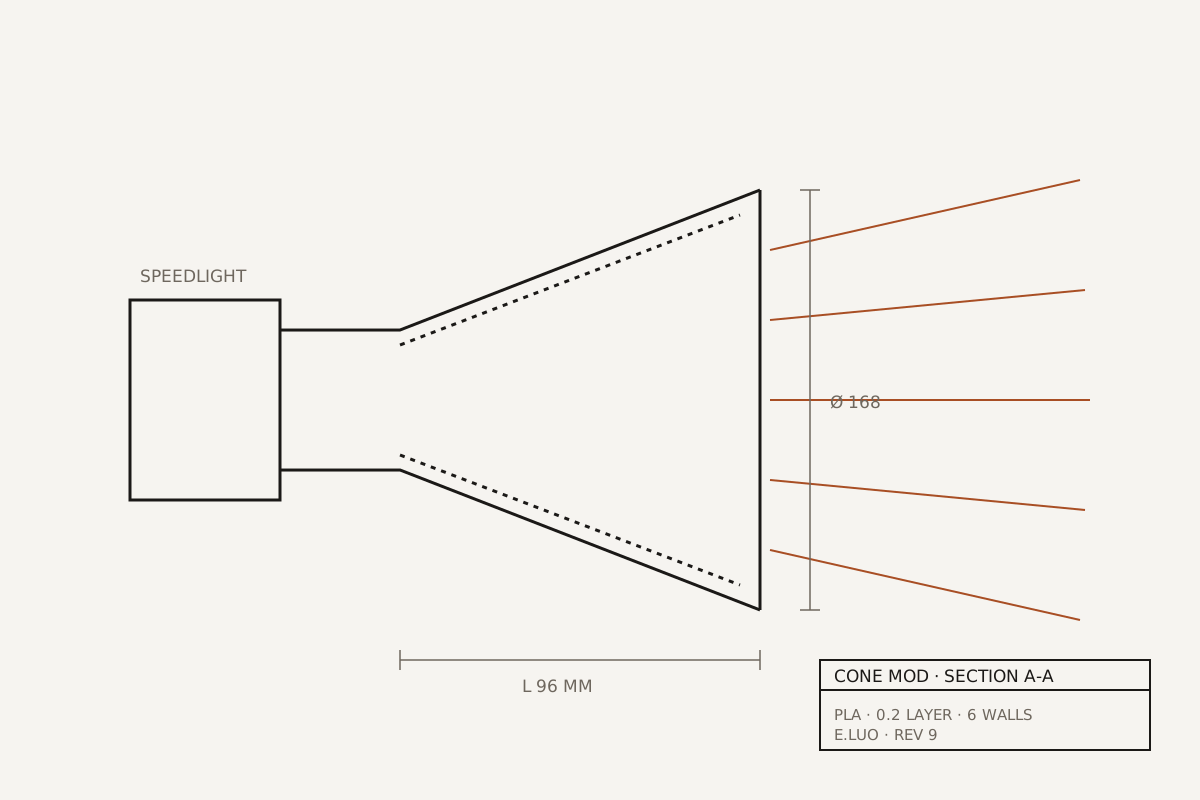
Problem statement
Bare speedlight: harsh, specular, unflattering. Softbox: lovely, and roughly the size of a carry-on. I wanted the 80% solution that fits in a camera bag — a printed cone that catches the flash head by friction and spreads the beam through a matte white interior.
Parametric from the start
The whole geometry is driven by a Fusion 360 parameter table, so the same file re-generates for any flash head:
| Parameter | v9 value | Governs |
|---|---|---|
throat_w × throat_h | 46 × 72 mm | friction fit on the head |
interference | 0.4 mm | grip strength vs. PLA shrink |
exit_d | 168 mm | how soft the falloff gets |
length | 96 mm | hotspot control vs. packability |
wall | 2.0 mm | five perimeters, zero infill |
What nine revisions taught me
- v1–v3, the grip. Printed PLA shrinks unevenly with wall temperature. 0.4 mm interference holds a firm grip that survives light-stand whip without cracking during insertion.
- v4–v6, the hotspot. A straight cone tunnels a bright core straight through the middle. Re-profiling the flare with a gentle S-curve and sanding the inside matte spread it out; glossy layer lines act like a hall of mirrors.
- v7–v8, the heat. Full-power flash dumps into a closed white cone add up. Vent slots at the throat shed the heat with no measurable light leak on the histogram.
- v9. Ninety grams. Lives in the bag. Done.
The test target for every revision was the same: one portrait, one chrome spoon, one histogram. If you can make a spoon look good, faces are easy.
Files
STL plus the Fusion parameter table are in the repo, sized for my flash — change two numbers and reprint for yours.